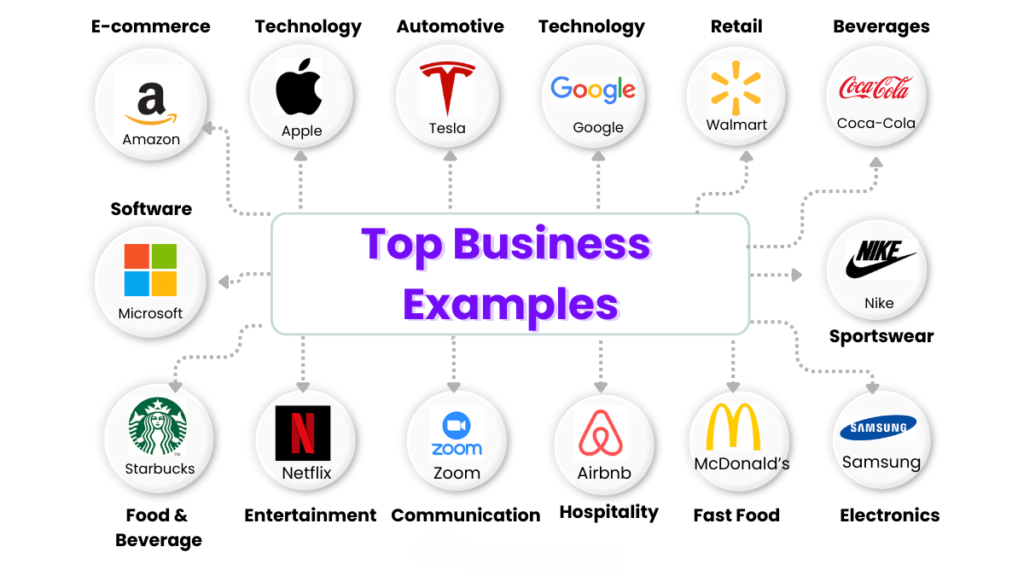
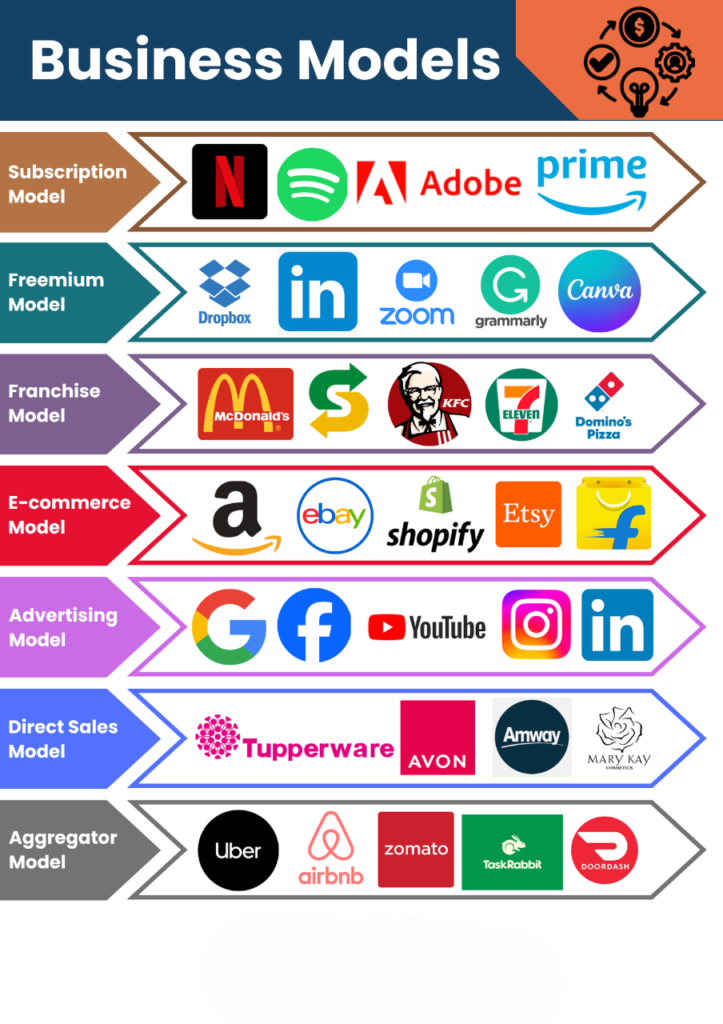
- Subscription Model – Netflix and Spotify offer recurring subscription services for entertainment.
- Freemium Model – Dropbox provides basic storage for free while charging for premium features.
- Franchise Model – McDonald’s and Subway operate through franchise partnerships.
- E-commerce Model – Amazon and eBay facilitate online retail and auctions.
- Advertising Model – Google and Facebook generate revenue through online advertisements.
- Affiliate Marketing Model – Websites like Wirecutter earn commissions by recommending products.
- Direct Sales Model – Avon and Tupperware sell directly to customers without intermediaries.
- Dropshipping Model – Oberlo helps entrepreneurs sell products without holding inventory.
- Marketplace Model – Airbnb and Uber connect service providers with customers on a platform.
- On-Demand Model – DoorDash and Instacart provide services when customers need them.
- Aggregator Model – Uber and Zomato aggregate services from multiple providers.
- White Label Model – Costco’s Kirkland Signature brand rebrands products from manufacturers.
- Product-as-a-Service (PaaS) Model – Rolls-Royce offers “Power by the Hour” for jet engines.
- SaaS (Software-as-a-Service) Model – Salesforce provides CRM software via a subscription.
- B2B (Business-to-Business) Model – Shopify offers tools and platforms for businesses.
- B2C (Business-to-Consumer) Model – Nike sells products directly to consumers.
- C2C (Consumer-to-Consumer) Model – eBay allows consumers to buy and sell from each other.
- D2C (Direct-to-Consumer) Model – Warby Parker sells eyeglasses directly to consumers online.
- Franchise Licensing Model – 7-Eleven operates using a global franchise licensing strategy.
- Wholesale Model – Costco sells products in bulk to customers at lower prices.
- Freemium-to-Premium Conversion Model – Zoom offers free basic plans and charges for advanced features.
- Pay-Per-Use Model – AWS charges based on the computing resources customers use.
- Pay-What-You-Want Model – Radiohead used this model to sell their album “In Rainbows.”
- Network Marketing Model – Amway and Herbalife operate through multi-level marketing.
- Lead Generation Model – NerdWallet generates revenue by referring users to financial products.
- API-Based Model – Stripe provides payment solutions through its API for developers.
- Joint Venture Model – Sony Ericsson formed as a joint venture between Sony and Ericsson.
- Consulting Model – Accenture provides business and IT consulting services.
- Data Monetization Model – Google monetizes user data for targeted advertising.
- Mobile App Monetization Model – Candy Crush generates revenue through in-app purchases.
Small Business Examples
- Bakery Business – Local bakeries offering fresh bread, cakes, and pastries.
- Coffee Shop – Small cafes serving specialty coffee and light snacks.
- Handmade Crafts – Selling handmade jewelry, candles, or pottery.
- Freelance Writing – Content creation for blogs, websites, or publications.
- Event Planning – Organizing weddings, parties, and corporate events.
- Fitness Trainer – Personal training sessions or small fitness classes.
- Landscaping Services – Lawn care, garden design, and maintenance.
- Pet Services – Grooming, pet sitting, or dog walking.
- Cleaning Services – Residential or office cleaning services.
- Photography – Event or portrait photography services.
- Tutoring Services – Academic or skill-based coaching for students.
- Food Truck – Mobile food services offering specific cuisines or beverages.
- Social Media Management – Managing small business social accounts.
- Digital Marketing Agency – SEO, PPC, or social ad campaigns for local clients.
- Home Repair Services – Plumbing, electrical, or general handyman services.
- Hair Salon – Haircuts, styling, and other beauty services.
- Online Course Creation – Developing educational courses on platforms like Udemy.
- Custom Apparel – Designing and selling t-shirts or other personalized clothing.
- Mobile Car Wash – On-the-go car cleaning and detailing services.
- Subscription Box Service – Curated monthly boxes for niche markets like pets or hobbies.
Types of Businesses
1. Sole Proprietorship
A business owned and operated by a single individual. It’s the simplest and most common structure.
- Advantages: Easy to set up, full control, and minimal regulations.
- Examples: Freelancers, local grocery stores, and independent consultants.
2. Partnership
A business owned by two or more individuals who share profits, losses, and management responsibilities.
- Advantages: Shared decision-making and resources.
- Examples: Law firms, accounting firms, and small family-owned restaurants.
3. Corporation
A legal entity separate from its owners, providing limited liability protection to its shareholders.
- Advantages: Limited liability, easier access to funding, and perpetual existence.
- Examples: Apple, Microsoft, and Coca-Cola.
4. Limited Liability Company (LLC)
A hybrid structure combining the benefits of a corporation and a partnership/sole proprietorship.
- Advantages: Limited liability and flexible management structure.
- Examples: Small tech startups, local retail stores, and service providers.
5. Franchise
A business that operates under the name and business model of an established brand.
- Advantages: Established reputation and support from the franchisor.
- Examples: McDonald’s, Subway, and 7-Eleven.
6. Nonprofit Organization
An entity focused on serving a social cause rather than generating profits.
- Advantages: Tax exemptions and eligibility for grants.
- Examples: Red Cross, Habitat for Humanity, and WWF.
7. Cooperative (Co-op)
A business owned and operated by a group of individuals for their mutual benefit.
- Advantages: Democratic decision-making and profit-sharing among members.
- Examples: Credit unions, agricultural cooperatives, and consumer co-ops.
8. E-commerce Business
A business that sells products or services online.
- Advantages: Lower operational costs and a wider customer reach.
- Examples: Amazon, eBay, and Etsy sellers.
9. Service-Based Business
A business that offers professional services rather than tangible products.
- Advantages: Low startup costs and high scalability.
- Examples: Consulting firms, salons, and marketing agencies.
10. Manufacturing Business
A business that produces goods using raw materials and sells them directly or indirectly to consumers.
- Advantages: Control over production and potential for scalability.
- Examples: Toyota (cars), Nike (shoes), and Samsung (electronics).
11. Retail Business
A business that sells goods directly to consumers, often in a physical storefront.
- Advantages: Direct customer interaction and higher margins on sales.
- Examples: Walmart, Zara, and local grocery stores.
12. Wholesale Business
A business that sells products in bulk to retailers or other businesses.
- Advantages: Higher sales volume and long-term contracts.
- Examples: Costco, Alibaba (B2B), and distribution companies.
13. Online Business
Any business that operates primarily or exclusively online.
- Advantages: Lower overhead costs and global accessibility.
- Examples: Udemy (online courses), Shopify (e-commerce platforms), and Zoom (virtual meetings).
14. Home-Based Business
A business operated from the owner’s home.
- Advantages: Flexible work environment and reduced overhead.
- Examples: Freelance writing, virtual assistants, and craft sellers.
15. Green Business
A business that prioritizes sustainability and eco-friendly practices.
- Advantages: Positive environmental impact and increasing consumer demand for sustainability.
- Examples: Patagonia, Beyond Meat, and Tesla.
16. Startup
A newly established business focused on innovative solutions, often in technology or services.
- Advantages: High growth potential and opportunities for venture funding.
- Examples: Airbnb, Uber, and SpaceX.
17. Brick-and-Mortar Business
A traditional business with a physical storefront or office.
- Advantages: Face-to-face customer interaction and local market focus.
- Examples: Local restaurants, bookstores, and fitness centers.
18. Freelance Business
An individual providing specialized services independently.
- Advantages: Flexible work schedule and control over projects.
- Examples: Graphic designers, writers, and photographers.
19. Aggregator Business
A platform that collects services or products from multiple providers and presents them to customers.
- Advantages: Scalable and commission-based revenue.
- Examples: Uber, Airbnb, and Foodpanda.
20. Consulting Business
A business offering professional advice and strategies in specific industries.
- Advantages: Expertise-driven and low initial costs.
- Examples: McKinsey & Company, BCG, and freelance consultants
How to Start a Business
- Identify a Business Idea
Think of an idea that solves a problem or meets a demand in the market. Ensure it’s something you’re passionate about and has the potential for profitability. - Conduct Market Research
Research your target audience to understand their needs, preferences, and buying habits. Analyze competitors to identify gaps in the market that you can fill. Use surveys, interviews, and industry reports for accurate insights. - Create a Business Plan
A business plan serves as a roadmap. Include:
- Executive Summary: Your business idea in a nutshell.
- Market Analysis: Details about the target market and competitors.
- Products/Services: What you’ll offer and how it solves a problem.
- Financial Plan: Revenue projections, funding requirements, and costs.
- Choose a Business Structure
Select a legal structure that suits your business, such as:
- Sole Proprietorship: Simple and low-cost for small businesses.
- LLC (Limited Liability Company): Protects personal assets while offering flexibility.
- Corporation: Ideal for larger businesses with shareholders.
- Register Your Business
Choose a unique business name and register it with your local government. Obtain required licenses and permits depending on your industry and location. - Set Up Finances
Open a dedicated business bank account to keep finances separate.
- Secure funding through loans, investors, or personal savings.
- Set up accounting software like QuickBooks to track expenses and income.
- Build Your Brand
Your brand is how people perceive your business.
- Create a memorable logo and brand identity.
- Build a professional website and optimize it for search engines (SEO).
- Develop a social media presence to engage with potential customers.
- Launch Your Business
- Start with a soft launch to test your operations.
- Gather feedback and make necessary improvements.
- Invest in marketing strategies like online ads, email campaigns, and influencer collaborations.
- Monitor and Adapt
Regularly assess your business performance using metrics like sales, customer feedback, and profit margins. Stay flexible and ready to pivot if needed.
Tips to Start a Business
- Define Your Vision and Goals
Have a clear purpose for your business and identify the problem you aim to solve. - Conduct Market Research
Understand your target audience, industry trends, and competitors to find your unique edge. - Start Small and Validate
Launch a minimum viable product (MVP) or service to test demand before scaling. - Create a Solid Business Plan
Outline your strategy, finances, and growth roadmap to guide your actions effectively. - Focus on Customers
Build your business around solving customer problems and delivering excellent value. - Manage Finances Efficiently
Separate personal and business finances, and track your budget carefully. - Adapt and Stay Persistent
Embrace feedback, learn from challenges, and remain committed to your vision.
Starting and running a business is a journey of vision, strategy, and adaptability. By understanding market needs, delivering value to customers, and leveraging effective tools and resources, businesses can thrive in competitive environments. Whether it’s a small startup or a large-scale enterprise, success comes from persistence, innovation, and a commitment to growth. A well-executed business not only drives economic progress but also creates lasting impact by addressing real-world challenges and enriching lives.